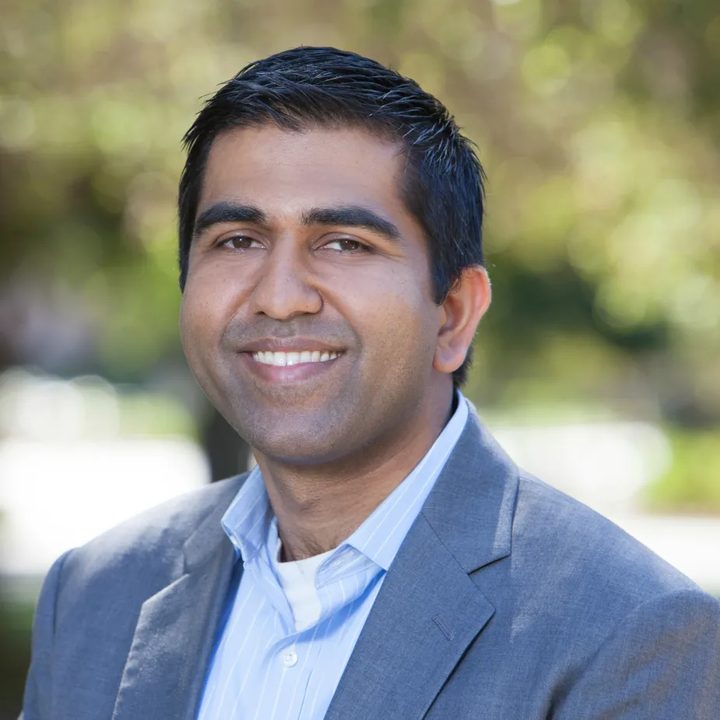
Neil Malhotra
Edith M. Cornell Professor of Political Economy
Graduate School of Business, Stanford University
Neil Malhotra studies American politics, political behavior, and survey methodology, with recent work spanning political polarization, social media, and the intersection of business and society. He has authored over 100 articles and three books, and directs the Center for Social Innovation at the Stanford Graduate School of Business.
Books
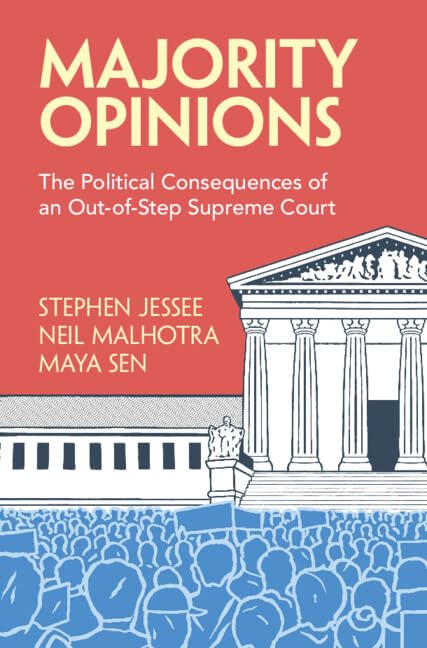
Majority Opinions: The Political Consequences of an Out-of-Step Supreme Court
Uses annual nationally representative surveys, fielded before the Court rules each term, to measure how far Supreme Court decisions diverge from majority opinion — and what that gap means for the Court's legitimacy and the politics of reform.
Publisher's Version Amazon Data Archive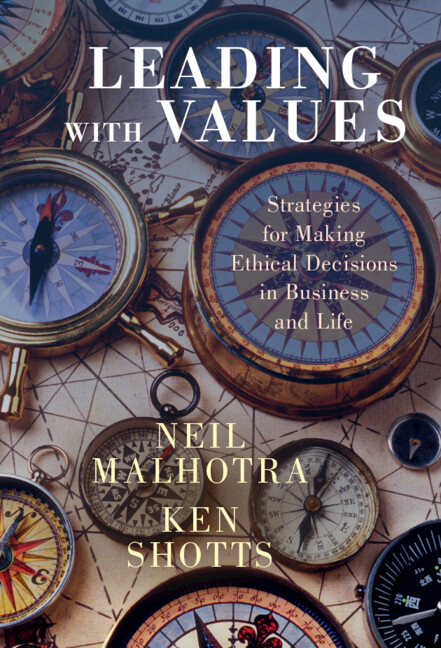
Leading with Values: Strategies for Making Ethical Decisions in Business and Life
A framework for making ethical decisions in business and life, developed from the ethics course Malhotra and Shotts teach to MBA students at the Stanford Graduate School of Business.
Publisher's Version Amazon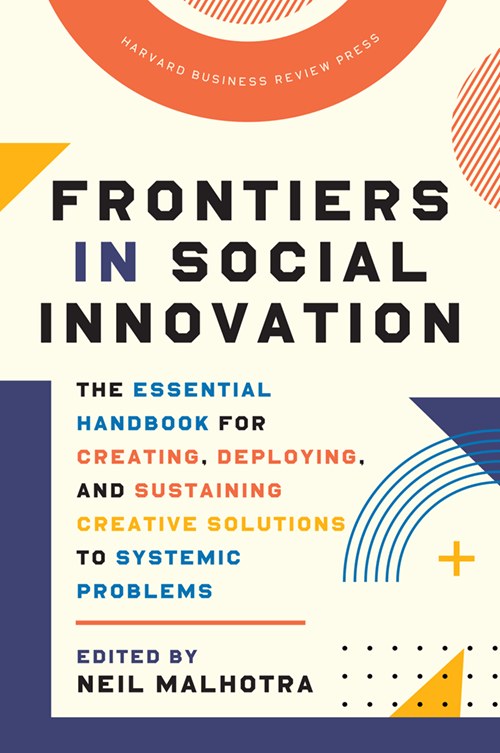
Frontiers in Social Innovation: The Essential Handbook for Creating, Deploying, and Sustaining Creative Solutions to Systemic Problems
An edited handbook on creating, deploying, and sustaining solutions to systemic social problems, drawing on the work of the Center for Social Innovation at the Stanford Graduate School of Business.
Publisher's Version AmazonResearch Areas
Representative Publications
Business and Society
How businesses, executives, and economic elites engage with politics, regulation, and ethics.
- . 2022. Leading with Values: Strategies for Making Ethical Decisions in Business and Life. New York: Cambridge University Press.
- . 2019. “Does Private Regulation Preempt Public Regulation?” American Political Science Review 113(1): 19-37.
- . 2019. “Predispositions and the Political Behavior of American Economic Elites: Evidence from Technology Entrepreneurs.” American Journal of Political Science 63(1): 212-233.
- . 2013. “Economic Explanations for Opposition to Immigration: Distinguishing Between Prevalence and Conditional Impact.” American Journal of Political Science 57(2): 391-410.
Political Polarization
The origins and consequences of partisan animosity in American politics and everyday life.
- . 2019. “The Origins and Consequences of Affective Polarization in the United States.” Annual Review of Political Science 22: 129-146.
- . 2017. “Political Homophily in Social Relationships: Evidence from Online Dating Behavior.” Journal of Politics 79(1): 269-283.
- . 2016. “Does Media Coverage of Partisan Polarization Affect Political Attitudes?” Political Communication 33(2): 283-301.
- . 2018. “The Economic Consequences of Partisanship in a Polarized Era.” American Journal of Political Science 62(1): 5-18.
Social Media and Politics
Large-scale field experiments on how social media platforms shape political attitudes and behavior, from the U.S. 2020 Facebook and Instagram Election Study.
- . 2023. “How Do Social Media Feed Algorithms Affect Attitudes and Behavior in an Election Campaign?” Science 381(6656): 398-404.
- . 2023. “Like-Minded Sources on Facebook Are Prevalent but Not Polarizing.” Nature 620(7972): 137-144.
- . 2023. “Asymmetric Ideological Segregation in Exposure to Political News on Facebook.” Science 381(6656): 392-398.
- . 2023. “Reshares on Social Media Amplify Political News but Do Not Detectably Affect Beliefs or Opinions.” Science 381(6656): 404-408.
Survey Methodology
Measurement, sampling, and design in public opinion research.
- . 2008. “Completion Time and Response Order Effects in Web Surveys.” Public Opinion Quarterly 72(5): 914-934.
- . 2007. “The Effect of Survey Mode and Sampling on Inferences about Political Attitudes and Behavior: Comparing the 2000 and 2004 ANES to Internet Surveys with Non-Probability Samples.” Political Analysis 15(3): 286-323.
- . 2017. “Developing Standards for Post-Hoc Weighting in Population-Based Survey Experiments.” Journal of Experimental Political Science 4(2): 161-172.
Retrospective Voting
How voters reward and punish governments for events and policy, including natural disasters.
- . 2013. “Retrospective Voting Reconsidered.” Annual Review of Political Science 16: 285-306.
- . 2009. “Myopic Voters and Natural Disaster Policy.” American Political Science Review 103(3): 387-406.
- . 2010. “Irrelevant Events Affect Voters' Evaluations of Government Performance.” Proceedings of the National Academy of Sciences 107(29): 12804-12809.
- . 2008. “Attributing Blame: The Public's Response to Hurricane Katrina.” Journal of Politics 70(1): 120-135.
Publication Bias
How publication and reporting practices shape the published scientific record, and efforts to promote research transparency.
- . 2014. “Publication Bias in the Social Sciences: Unlocking the File Drawer.” Science 345(6203): 1502-1505.
- . 2015. “Promoting an Open Research Culture.” Science 348(6242): 1422-1425.
- . 2008. “Do Statistical Reporting Standards Affect What Is Published? Publication Bias in Two Leading Political Science Journals.” Quarterly Journal of Political Science 3(3): 313-326.
- . 2016. “Underreporting in Psychology Experiments: Evidence from a Study Registry.” Social Psychological and Personality Science 7(1): 8-12.